Javad Farahani

I work with startups, universities, and innovation ecosystems through advisory, research, speaking, and workshop-led collaboration.
Helping startups and organizations shape strategy, product direction, and emerging technology decisions.
Building academic and cross-sector collaboration around innovation, AI, blockchain, and organizational transformation.
Contributing to conferences, academic events, and public conversations on innovation and emerging technologies.
Designing practical sessions for universities, institutes, and innovation programs focused on strategy and capability-building.
Helping startups and organizations shape strategy, product direction, and emerging technology decisions.
Collaborating on interdisciplinary research, academic exchange, and innovation-oriented initiatives.
Contributing through mentoring, workshops, and startup ecosystem programming.
Designing workshops, advisory support, and strategic conversations around innovation and technology.
A selection of recent projects and collaborations across innovation, strategy, and emerging technologies.



I engage in interdisciplinary research, academic exchange, and cross-sector collaboration focused on innovation, emerging technologies, and practical impact.


Possible topics:
- AI & innovation strategy
- Blockchain & emerging technology
- Product thinking, agile leadership, and organizational innovation

Current Research & Future Directions
I develop interdisciplinary research at the intersection of emerging technology, energy systems, product innovation, and public value. The projects below are open to carefully aligned academic and cross-sector collaboration, particularly where partners can contribute data, domain expertise, field access, technical infrastructure, or validation settings.
System-Condition Windows for Flexible Electricity Demand
Active research · Seeking energy-sector and data collaborators
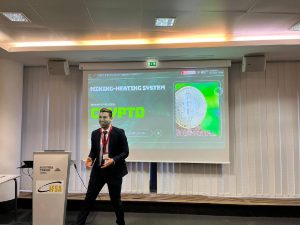
This research investigates when controllable electricity demand can operate under favourable system conditions without relying on simplified surplus or price signals. Austrian electricity-system data and a policy-contingent Bitcoin-mining illustration are used to develop a transparent approach that can also be applied to data centres, industrial processes, storage, and other flexible loads.
Research Goal
The project develops a system-condition screening framework that distinguishes priority, conditional, background, and exclusion periods for flexible electricity demand. It examines operational conditions, grid-stress indicators, renewable availability, market signals, and the consequences of different activation rules.
Current Stage
The system-level dataset, screening logic, robustness analysis, and illustrative dispatch analysis have been developed. The current work focuses on manuscript preparation, interpretation, and strengthening the practical and policy implications.
Public Austrian data support system-level analysis but do not provide sufficient detail for nodal congestion or local network-feasibility assessment. Collaboration could therefore extend the study through more granular data or field validation.
Collaboration Fit
Who: Transmission and distribution system operators, energy-market institutions, flexibility aggregators, data-centre operators, industrial energy users, power-system laboratories, and researchers in energy informatics, demand response, or electricity markets.
How: Partners could contribute anonymized operational or nodal data, validate the screening criteria, provide access to simulation environments or measurement equipment, evaluate implementation constraints, or support a controlled pilot study.
Why collaborate: The project can provide partners with evidence-based insights into when and how flexible demand may be scheduled more responsibly. Meaningful academic contributions may also support co-authorship in accordance with recognized authorship standards.
Expected Outcomes
- Open-access peer-reviewed journal article
- Transferable flexible-demand screening framework
- Practical recommendations for organizations and policymakers
- Foundation for a future field study or operational pilot
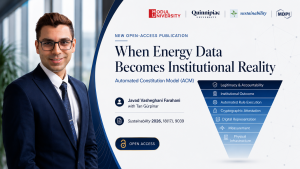
A Framework to manage & Regulate Digital Twins of Energy Data
Active research · Seeking conceptual and empirical validation partners
This research examines when blockchain-secured digital twins move beyond recording physical infrastructure and begin contributing to institutional outcomes such as certification, compliance, ownership, legitimacy, and accountability.
Research Goal
The project develops an institutional model explaining how measured infrastructure conditions can become verified digital records, executable rules, and institutionally recognized outcomes.
It also investigates how responsibility is distributed among infrastructure operators, sensor providers, data-model designers, smart-contract developers, certifiers, regulators, and platform-governance actors.
Current Stage
The conceptual model and its principal mechanisms have been developed. The next stage is to strengthen its empirical testability through cases involving energy infrastructure, certification systems, building information modelling, renewable-energy records, or automated compliance processes.
Collaboration Fit
Who: Researchers in blockchain, digital twins, information systems, infrastructure governance, social ontology, law, certification, or public administration; infrastructure operators; standards organizations; certifiers; regulators; and technology providers.
How: Partners could contribute case access, governance documentation, standards expertise, practitioner interviews, institutional-process mapping, technical architecture, or evidence from operational digital-twin implementations.
Why collaborate: Collaboration can help organizations identify where technical verification becomes an institutional decision and where accountability gaps may emerge. Academic partners can contribute to testing, extending, or challenging the proposed model.
Expected Outcomes
- Open-access conceptual or empirical journal article
- Diagnostic framework for institutional digital twins
- Governance and accountability recommendations
- Comparative cases across infrastructure or certification settings
Future direction · Open to research and industry partners
This future research direction examines how AI-supported products and organizational decisions can remain understandable, usable, contestable, and accountable to the people affected by them.
The focus is not only on model performance, but also on how AI is experienced through interfaces, workflows, explanations, product decisions, and organizational governance.
Research Goal
Potential studies may investigate explainable AI interfaces, human oversight, user trust, responsible product design, AI-supported decision-making, algorithmic transparency, or the integration of AI into product-management and service-design processes.
Particular attention will be given to situations in which user experience, organizational incentives, and responsible-AI principles may conflict.
Current Stage
This is an open future-research direction. Specific research questions and methods will be developed with partners that can provide a meaningful application context, relevant expertise, or an appropriate evaluation environment.
Collaboration Fit
Who: Human–computer interaction and information-systems researchers, AI-governance researchers, UX laboratories, responsible-AI teams, digital-product organizations, public-service institutions, and organizations deploying AI-supported decision tools.
How: Partners could contribute anonymized interaction data, access to users or practitioners, prototype systems, UX research facilities, controlled study environments, design expertise, or real organizational use cases.
Why collaborate: Organizations can obtain independent evidence about the usability, transparency, and governance of their AI-enabled products. Researchers can jointly develop theoretically grounded and practically testable studies with clear societal and organizational relevance.
Expected Outcomes
- Open-access empirical or conceptual journal article
- Human-centered AI evaluation framework
- Design and governance recommendations
- Research prototypes or controlled user studies
Do you have relevant data, technical expertise, field access, laboratory facilities, research infrastructure, or an organizational setting that could strengthen one of these projects?
Javad Farahani
- PhD Candidate, Blockchain Lecturer, and Researcher at MODUL University Vienna
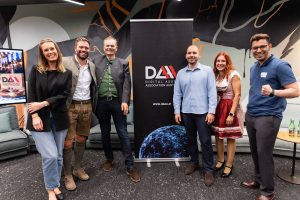
- Technical Program Manager at the Digital Asset Association Austria (DAAA)
- 5+ years of technical product management experience across banking, fintech, and Web3
- Founded / co-founded 3 startups that collectively completed more than 2 fundraising rounds, built teams of up to 27 employees, and reached 500,000+ users
- Served as a lead jury member for a startup incubator
- Advised 7+ organizations on agile leadership, portfolio management, and product strategy
- MSc in Innovation and Product Management
- MBA in Strategic Management
- Certified SAFe® 5 Product Owner/Product Manager
Machine Learning credential from Stanford University
Additional selected credentials in product management, blockchain, artificial intelligence, and agile delivery